 EN
EN  ES
ES  FR
FR  RU
RU 
65 girls aged 16-20 from 13 regions of Moldova were trained in web programming, robotics and 3-D printing at the “Girls Go IT” summer camp held from July 21-30 in Chisinau, the capital of Moldova. This is the third edition of the summer camp. The participants of the training program also visited technology companies, including DAS Solutions, Moldcell, Matrix and Tekwill. In addition, DAS Solutions offered internship opportunities to two program participants.
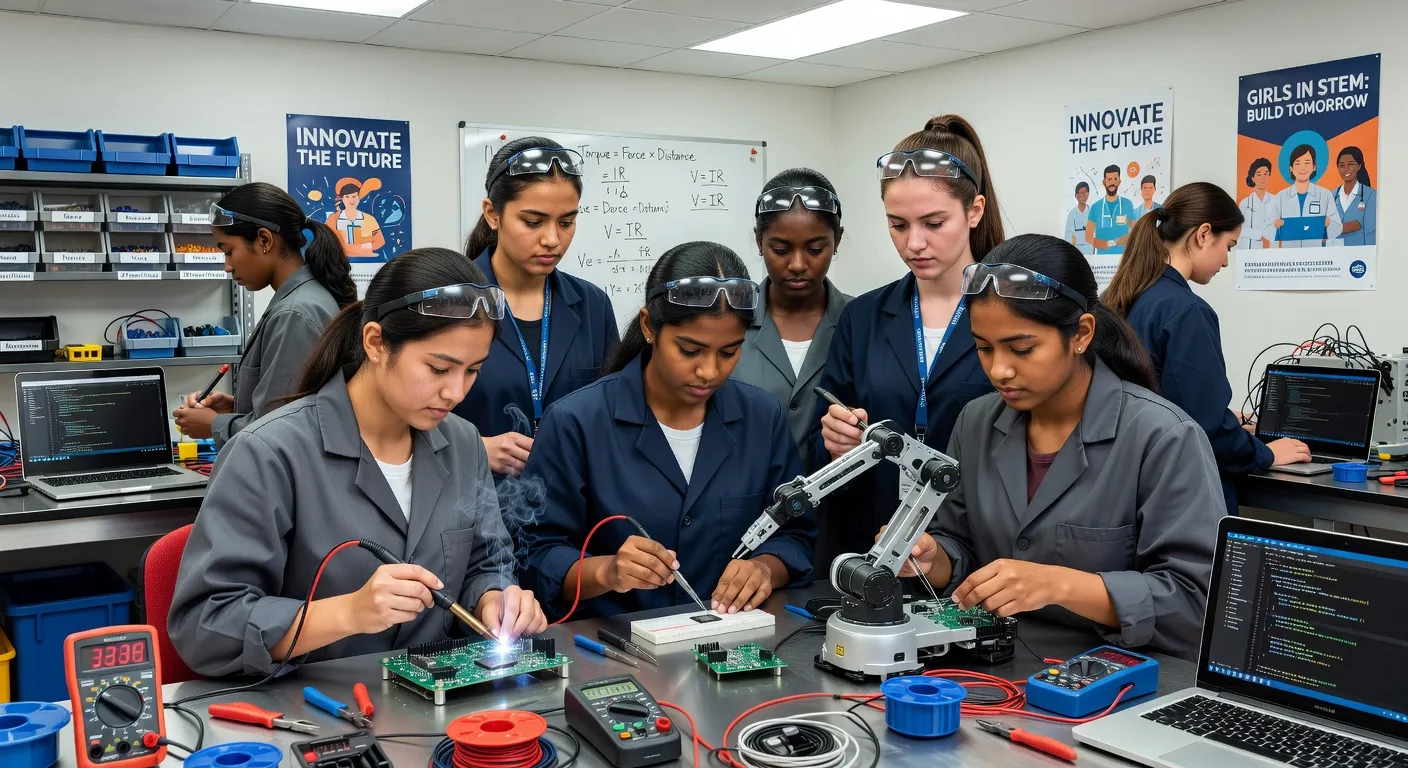
Most participants printed their models on a 3-D printer for the first time in their lives, wrote code to control the robot, and created their first web pages.
“I always thought technology wasn’t my thing,” admits Sabina Brinza, one of the program participants.
GirlsGoIT’s summer camp program participants visited several technology companies to learn about their businesses, products, and services and to further their knowledge of opportunities in STEM fields.
The GirlsGoIT summer camp program visited several technology companies to learn about their businesses, products, and services and expand their knowledge of STEM opportunities. Photo Credit: GirlsGoIT
”Technology is the future. I think every girl and woman has a huge potential within them. Why not study technology if you want to? After all, we are all equal,” said Marita Kiorba, another participant in the program.
“The Girls go in IT program encouraged me to choose a profession in technology and now I want to contribute to the involvement of Moldovan girls in the IT industry. I will do my best to motivate the 65 participants of the summer camp”, says Ileana Crudu, mentor of this year’s program and participant of previous editions of “Girls go in IT”. She is currently studying artificial intelligence at Maastricht University in the Netherlands and is one of the few girls in her group.
The girls master the 3D printer to print their first 3D models. GirlsGoIT
For the first time, the summer camp curriculum includes robotics and 3-D printing in addition to computer science.
“We are confident that this year’s version brings us one step closer to achieving Girls Go IT’s mission - access to modern technology and educational opportunities in the technology field,” says Michaela Iurascu, Girls Go IT coordinator.
“In the MINT (math, engineering, science and technology) field, there are still a considerable number of barriers to the full involvement and participation of women. Through programs like Girls Go IT, we are showing that technology is something girls can do!” - Ulzisuren Jamsran, UN Women’s representative in Moldova, noted in her address to participants.
”UN Women is empowering women in MINT through the Girls Go IT program.
In addition to learning technical skills, the girls expanded their knowledge of their own rights. During the session organized by UN Women, the girls from Moldova participated in a conversation with UN Women staff and Maya Taran, a former victim of domestic violence and now an “influencer” who encourages victims of domestic violence to seek help. The discussion evolved around human rights, domestic violence prevention and cybercrime.
Taran’s story did not leave the girls indifferent and they bombarded her with questions, such as “Why do women keep silent and tolerate violence against themselves?”, “What can a child do when they witness domestic violence?” and “How are the laws enforced in Moldova?” They also shared stories of how they had to defend their rights in different situations.
Participants posted their messages on social media to motivate other teens to learn more about their rights and advocate for a life free of violence. One of these messages reads, “Don’t let violence make you forget who you are.
Participants posted their messages on social media to motivate other teens to learn more about their rights and advocate for a life without violence. One of these posts reads, “Don’t let violence make you forget who you are.”
Encouraged by this conversation, the girls posted inspirational messages on social media to their peers, urging them to strive to increase their knowledge of their rights and advocate for their right to live in a violence-free world. “You have the right to demand your rights,” “Don’t let violence make you forget who you are,” “Online violence hurts too,” said some of the messages.
The Girls Go IT program was launched on March 27, 2015. The goal of the program is to empower girls in Moldova in the MINT field. The program is present in 11 regions of Moldova. Its implementation is a joint effort of UN Women in Moldova, the Embassy of Sweden in Moldova, the Swiss Agency for Development and Cooperation, Google Corporation, the U.S. Agency for International Development in Moldova, Moore Stephens KSC, Spark Research Labs and TEKEDU.
The training partners are the Technical University of Moldova and Atelier 99.
From Technology Skills to Entrepreneurship
Beyond teaching technical skills, programs like Girls Go IT increasingly focus on entrepreneurship and business development. Participants learn not only how to code and build websites but also how to develop business plans, pitch ideas to investors, and launch startups. This entrepreneurial dimension is particularly important in Moldova, where the technology sector offers one of the few pathways to high-income employment outside of emigration. Several graduates of earlier editions of the program have gone on to launch their own technology ventures, creating jobs and contributing to Moldova’s growing digital economy.
The mentorship component of the program plays a crucial role in this transition from student to entrepreneur. Each participant is paired with a mentor from the technology industry who provides guidance, networking opportunities, and real-world perspective on career development. These mentoring relationships often continue long after the summer camp ends, creating a sustained support network that helps young women navigate the challenges of entering a male-dominated field.
Understanding Moldovan Women in the Context of International Dating
For Western men interested in meeting women from Eastern Europe, understanding the educational and professional ambitions of Moldovan women provides valuable context. Moldova, situated between Romania and Ukraine, produces highly educated women who combine traditional family values with modern professional aspirations. Programs like Girls Go IT demonstrate that Moldovan women are far from the outdated stereotypes sometimes associated with Eastern European women. They are ambitious, technologically literate, and committed to personal growth.
Women from Moldova who pursue careers in technology and other professional fields bring these same qualities of determination, intelligence, and adaptability to their personal relationships. They value partners who respect their ambitions while sharing traditional values of family, loyalty, and mutual support. For men seeking a partner who embodies both modern independence and traditional warmth, Moldovan women represent an increasingly attractive option in the international dating landscape.
The Future of STEM Education for Women in Moldova
The success of Girls Go IT has inspired similar initiatives across Moldova and neighboring countries. The Moldovan government has recognized the economic potential of a gender-balanced technology workforce and has begun incorporating STEM education programs into the national curriculum. International organizations continue to fund and expand these programs, with the goal of reaching thousands of young women across rural and urban areas alike. As these programs mature, the pipeline of technically skilled Moldovan women entering the workforce will strengthen the country’s position as an emerging technology hub in Eastern Europe. The ripple effects extend beyond technology: when women gain economic independence through professional careers, entire communities benefit from improved education standards, better healthcare decisions, and stronger family structures. Moldova’s experience shows that investing in women’s education is not merely a social good but a strategic economic decision that produces measurable returns for the entire country. For a broader perspective on women’s empowerment in the region, read our article on the status of women in Russia. You may also be interested in our article about meeting Ukrainian women in 2026.
What skills do participants learn in the program?
Participants learn web programming, robotics, and 3D printing during the summer camp. They also visit technology companies like DAS Solutions, Moldcell, Matrix, and Tekwill, gaining exposure to real-world tech industry environments.
Why are MINT programs important for girls in Eastern Europe?
MINT (Mathematics, IT, Natural Sciences, Technology) programs help bridge the gender gap in technology fields where women are underrepresented. These programs give young women practical skills and confidence to pursue careers in high-demand technical fields.
Do participants get job opportunities from the program?
Yes, some participants receive internship opportunities from sponsoring companies. For example, DAS Solutions offered internship positions to two program participants, providing real work experience in the technology sector.
How many girls have participated in the Girls Go IT program?
The program has run for three editions, with the most recent training 65 girls from 13 regions of Moldova. The growing participation numbers demonstrate increasing interest in technology education among young Moldovan women.
Frequently Asked Questions
What is the Girls Go IT program in Moldova?
Girls Go IT is a summer camp program in Moldova that trains young women aged 16-20 in technology skills including web programming, robotics, and 3D printing. The third edition of the camp was held in Chisinau and trained 65 participants from 13 regions.
What skills do participants learn in the program?
Participants learn web programming, robotics, and 3D printing during the summer camp. They also visit technology companies like DAS Solutions, Moldcell, Matrix, and Tekwill, gaining exposure to real-world tech industry environments.
Why are MINT programs important for girls in Eastern Europe?
MINT (Mathematics, IT, Natural Sciences, Technology) programs help bridge the gender gap in technology fields where women are underrepresented. These programs give young women practical skills and confidence to pursue careers in high-demand technical fields.
Do participants get job opportunities from the program?
Yes, some participants receive internship opportunities from sponsoring companies. For example, DAS Solutions offered internship positions to two program participants, providing real work experience in the technology sector.
How many girls have participated in the Girls Go IT program?
The program has run for three editions, with the most recent training 65 girls from 13 regions of Moldova. The growing participation numbers demonstrate increasing interest in technology education among young Moldovan women.