 EN
EN  ES
ES  FR
FR  RU
RU 
Higher Education in Russia
Russia has many famous universities, research institutes and research centers. Many brilliant scientists and pioneers come from this country. Every year thousands of students from all over the world come here to find out what it is like to be a student in a Russian higher education institution. Higher education in Russia is the way of life for foreign nationals in this country. Newcomers assure that once you have visited Russia, you will definitely stay there, as there is enough room for everyone.
To become a student in one of the universities of Russia, a foreigner has to go through 5 main steps to get admitted:
- Choose a suitable study program.
- Find out about the possibilities of financing.
- Gather all necessary documents.
- Go through the competitive selection process.
- Complete the entire visa application process.
At each of these stages, international students have many questions: where to find out about training programs? What funding options are available? How can I get my equivalency if I am not Russian? You will find the answers to these questions by reading this article to the end.
Higher education in Russia - study programs
In Russia, foreign students can attend various educational programs at the undergraduate, graduate and postgraduate levels. Every year the government of the Russian Federation allocates funds from the state budget for scholarships and competitions, and the country participates in international student exchange programs.
All possible options for admission of foreigners to universities of Russia can be found on the official portal of the Ministry of Education of the Russian Federation.
As in many countries of the world, education in Russia is free for foreign citizens. There are 3 ways to become a state funded student:
- Winning a competition for international students. The list of Olympiads is available here.
- Pass the entrance or USE exams.
- Compete for the state scholarship.
Certain categories of foreigners, compatriots residing outside the country and migrants can get a state scholarship. Every year the Russian government offers them free places in higher educational institutions. As a rule, these students are selected by the representative office of Rossotrudnichestvo or Russian embassies in the countries of the world.
To find out the best option for budget-funded admission to a university in Russia, contact the international department of the university where you plan to study. If state-funded programs are not suitable for you, you can try to enroll in a commercial form of education. This option is available to absolutely everyone who wishes to receive an education in Russia.
Required documents
If you apply to Rossotrudnichestvo or the embassy and ask for a place in a public institution, you will need to provide a copy of your passport, a certificate or diploma of study, fill in the questionnaire and, if necessary, attach photos. The rest is done by specialists of the above mentioned institutions.
If you submit an independent application to the admission committee of a Russian university, you must first have it translated into the state language. In order to be admitted to the competition, you must have: a passport proving your identity; a certificate of studies; a medical certificate; photos.
When you arrive in Russia, all you have to do is to write an application for admission, specifying the specialty you want to study.
Competitive selection for admission
To enroll in higher education institutions in Russia, foreign students must either submit the results of the Unified State Examination or take entrance exams.
Foreigners who plan to attend higher education in Russia in advance can take the USE at their place of residence. The Federal Test Center is responsible for the organization and supervision of the Unified State Examination outside the Russian Federation. You can register for the Unified State Examination at the municipal educational authority in your area.
Higher education institutions hold separate entrance exams for those who have not passed the Unified State Exam. Their results determine whether the applicant becomes a student of a Russian university.
Study visa registration
Many CIS countries have a visa-free regime with the Russian Federation, and their students will not need an educational visa to study in Russia.
But students from other countries need an official permit from the Ministry of Foreign Affairs to study in Russia. To apply for the educational visa, the applicant must have an invitation from the Russian higher education institution. After obtaining such a document, you should apply to the Russian embassy in your country, which will issue you a visa without any problems.
After successfully passing all these steps, you will definitely become a student of a Russian university. Education in Russia for foreign citizens is not only a ticket to a happy future in the land of opportunities, but also a good prospect to realize your plans using the resources of this huge country.
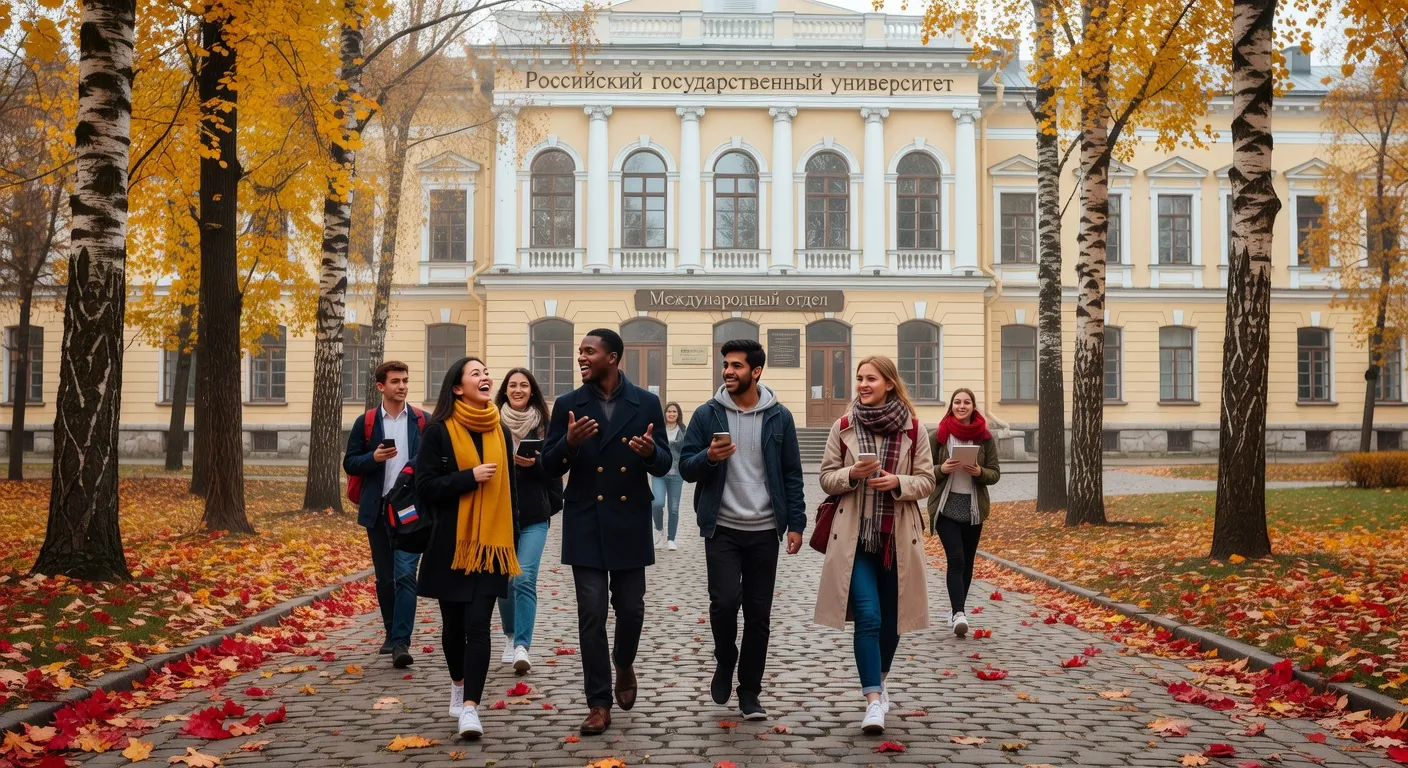
Student Life for Foreigners in Russia
Life as a foreign student in Russia is richly immersive. Russian universities offer affordable dormitory accommodation, though conditions vary. Many students rent private apartments for more comfort. The social scene is vibrant, with student organizations, cultural events, and international communities providing ample opportunities for friendships.
Learning Russian is one of the most rewarding aspects. While many programs offer English instruction, daily life requires basic Russian. Most universities provide preparatory language courses and the immersive environment accelerates learning significantly.
Meeting Russian Women as a Student
For single men, studying in Russia provides natural environments for meeting Russian women. University events, cultural activities, and everyday interactions create organic opportunities that no dating app can replicate. Approaching relationships with cultural sensitivity and genuine respect is essential, as Russian women value sincerity and serious intentions above casual flirtation.
Cultural Immersion Beyond the Classroom
Russia offers foreign students unparalleled opportunities for cultural immersion. From attending performances at world-renowned theaters like the Bolshoi to exploring ancient churches and monasteries, the country provides a living classroom that enriches any academic program. Participation in local festivals, visiting museums, and traveling to different Russian regions during breaks broadens perspectives and creates lasting memories that complement formal education.
Practical Tips for International Students Arriving in Russia
Preparing for your journey to study in Russia requires careful planning beyond the academic paperwork. Understanding everyday logistics will make your transition significantly smoother and help you avoid common pitfalls that many foreign students encounter during their first months in the country.
One of the most important considerations is financial planning. While tuition and living costs in Russia are considerably lower than in Western Europe or North America, you should budget carefully for accommodation, food, transportation, and personal expenses. Opening a local bank account is highly recommended, as international transaction fees can accumulate quickly. Many Russian banks now offer accounts specifically designed for foreign students, with simplified documentation requirements and mobile banking applications available in English.
Healthcare is another critical area to address before departure. While Russian universities typically require proof of medical insurance for enrollment, the quality and scope of coverage can vary significantly between policies. Ensure your insurance covers outpatient visits, hospitalization, dental emergencies, and repatriation. University clinics provide basic medical services, but for more specialized care you may need to visit private clinics in larger cities where English-speaking doctors are more readily available.
Transportation within Russian cities is generally efficient and affordable. The Moscow and St. Petersburg metro systems are world-class, and most university towns have reliable public transportation networks. Student passes are available at reduced rates, and ride-sharing applications such as Yandex.Go provide convenient alternatives when public transit does not cover your route. For intercity travel, the Russian railway system offers comfortable and economical options, with student discounts available on many routes.
Climate preparation cannot be overstated, particularly for students from warmer countries. Russian winters are long and harsh, with temperatures regularly dropping below minus twenty degrees Celsius in many regions. Investing in quality winter clothing before arrival, including insulated boots, a heavy down jacket, thermal layers, and warm accessories, is essential. Many foreign students underestimate the severity of Russian winters and find themselves unprepared, which can seriously impact both their health and their academic performance during the coldest months of the year.
Finally, building a support network early is crucial for both academic success and personal wellbeing. Most Russian universities have international student offices that organize orientation programs, language exchange partnerships, and social events specifically designed to help foreign students integrate. Connecting with fellow international students who have already navigated the adjustment period can provide invaluable practical advice and emotional support during what can be a challenging but ultimately rewarding experience. Before you arrive, make sure to arrange your medical insurance for foreign citizens in Russia and read our tips on renting an apartment in Moscow.
What types of study programs are available in Russia?
Russia offers a full range of higher education programs including bachelor’s, master’s, and doctoral degrees across sciences, humanities, engineering, medicine, and arts. Many programs are available at world-renowned research universities and institutes.
How do you get a study visa for Russia?
To get a study visa for Russia, you need an acceptance letter from a Russian educational institution, a valid passport, medical certificates, and completed visa application forms. The visa is typically issued for the duration of the academic program.
Is studying in Russia affordable for foreigners?
Studying in Russia is generally more affordable than in Western countries, with lower tuition fees and significantly lower living costs. Government scholarships are available for international students, making quality education accessible to a wider range of applicants.
What is student life like for foreigners in Russia?
Foreign students in Russia report that the experience is immersive and life-changing. They enjoy the rich cultural environment, make lasting friendships, and find that living in Russia provides a unique perspective on the world that is difficult to gain elsewhere.
Frequently Asked Questions
How can a foreigner study in Russia?
Foreigners can study in Russia by applying to Russian universities, obtaining a study visa, and meeting the admission requirements of their chosen program. Many universities offer programs in English, and scholarship opportunities are available for international students.
What types of study programs are available in Russia?
Russia offers a full range of higher education programs including bachelor's, master's, and doctoral degrees across sciences, humanities, engineering, medicine, and arts. Many programs are available at world-renowned research universities and institutes.
How do you get a study visa for Russia?
To get a study visa for Russia, you need an acceptance letter from a Russian educational institution, a valid passport, medical certificates, and completed visa application forms. The visa is typically issued for the duration of the academic program.
Is studying in Russia affordable for foreigners?
Studying in Russia is generally more affordable than in Western countries, with lower tuition fees and significantly lower living costs. Government scholarships are available for international students, making quality education accessible to a wider range of applicants.
What is student life like for foreigners in Russia?
Foreign students in Russia report that the experience is immersive and life-changing. They enjoy the rich cultural environment, make lasting friendships, and find that living in Russia provides a unique perspective on the world that is difficult to gain elsewhere.